
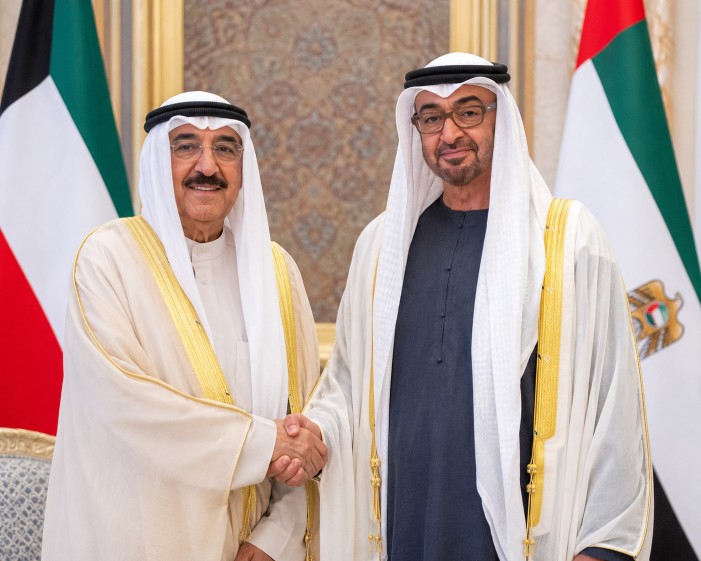
In a recent diplomatic engagement, Sheikh Mohamed bin Zayed Al Nahyan visited Kuwait, emphasizing the urgent need for enhanced peace and stability across the region. This visit followed a series of missile and drone assaults launched by Iran targeting the Gulf nation. During discussions at Bayan Palace, Sheikh Mohamed and Sheikh Meshal Al-Ahmad Al-Jaber Al-Sabah underscored their commitment to bolstering regional security and fostering lasting peace. They also explored avenues for expanding economic and developmental collaborations between their countries.
The timing of the visit was crucial, coming shortly after Kuwait’s air defense systems successfully intercepted multiple ballistic and cruise missiles, along with several drones fired from Iran. Although the interceptions prevented greater damage, debris from the missiles injured one person and caused material destruction in various areas. The incident has been met with strong condemnation from Kuwaiti officials, who labeled the attacks as a breach of national sovereignty and a significant threat to the stability of the region. In response, Kuwait’s government asserted its right to take all necessary actions to defend its territory, adhering to international law.
Aligning with Kuwait’s stance, the United Arab Emirates’ Ministry of Foreign Affairs issued a statement denouncing the attacks not only on Kuwait but also on Bahrain. The UAE highlighted its solidarity with both countries and reiterated its support for efforts aimed at safeguarding their security and maintaining regional stability. This collective response underscores the importance placed on mutual cooperation among Gulf nations in the face of security threats.
The discussions between Sheikh Mohamed and Sheikh Meshal also delved into the potential for expanding partnerships that could lead to economic growth and sustainable development. Such collaborations are seen as pivotal in strengthening ties and ensuring a stable and prosperous future for the region. As tensions remain high, the leaders’ dialogue points to a shared understanding that regional cooperation is imperative for overcoming challenges and achieving long-term peace.