
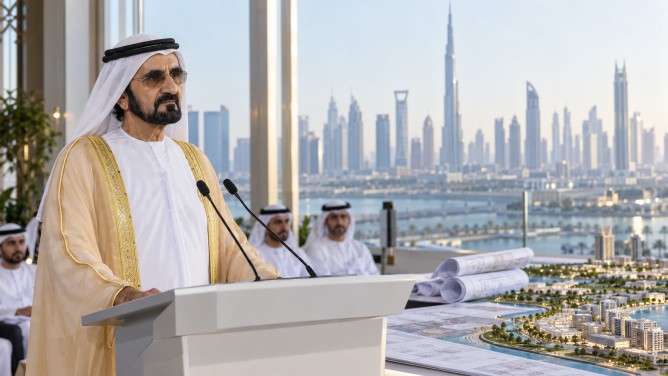
Sheikh Mohammed bin Rashid Al Maktoum, the ruler of Dubai, has unveiled an ambitious Dh2.1 trillion project pipeline aimed at catalyzing the emirate’s economic growth and solidifying its status as a global business hub. Announced at the Mohammed bin Rashid Leadership Forum held at the Dubai World Trade Centre, this extensive development plan spans various sectors including real estate, transport, aviation, energy, and infrastructure.
The strategy, described by Sheikh Mohammed as building a “city within a city,” places significant emphasis on real estate, with Dh1.1 trillion dedicated to developing approximately 350,000 residential units by 2030. This initiative is designed to address the housing needs of Dubai’s growing population and boost the real estate market.
In the aviation sector, substantial investments are planned for Al Maktoum International Airport and the expansion of the Emirates and flydubai fleets. The airport is set to receive Dh128 billion to enhance its capacity to accommodate up to 260 million passengers annually. Additionally, Dh328 billion will be allocated to expand airline fleets, and Dh18.7 billion will go towards a new Emirates engineering and maintenance complex.
Infrastructure projects form another critical component of the pipeline, with Dh100 billion earmarked for road improvements and the expansion of the Dubai Metro Blue and Gold lines. The development plan also includes Dh151 billion for expanding electricity and water networks, and Dh80 billion for the Dubai Strategic Sewerage Tunnels system.
Further investments target the financial sector, with Dh100 billion going into the second phase of the Dubai International Financial Centre. This aims to bolster Dubai’s financial services and international business infrastructure, reinforcing its appeal as a leading financial hub.
Sheikh Mohammed emphasized the importance of foresight in planning and infrastructure development, highlighting the emirate’s commitment to investing ahead of future demand. The project pipeline reflects Dubai’s broader strategy to enhance housing, transport, and essential services, supporting economic diversification and attracting international investment.