
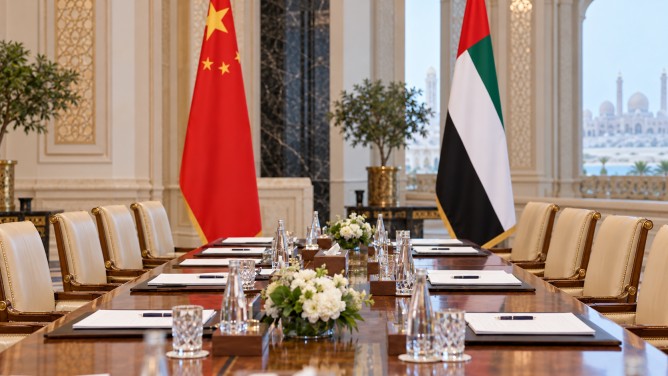
In a significant diplomatic engagement, Chinese Foreign Minister Wang Yi met with Khaldoon Khalifa Al Mubarak, the UAE President’s Special Envoy for China Affairs, in Beijing to discuss strategic cooperation and regional stability in the Middle East. During the meeting, both parties emphasized the importance of strengthening bilateral relations and addressing regional security issues.
Wang highlighted the robust political trust between China and the UAE, noting the considerable progress both nations have made in their cooperation efforts. He reiterated China’s commitment to enhancing these relations and supporting regional peace initiatives through ceasefire efforts, diplomatic negotiations, and political solutions.
Al Mubarak provided updates on the situation in the Gulf and the broader Middle East, showcasing the UAE’s initiatives to promote stability in the region. He expressed the UAE’s readiness to enhance communication and coordination with China, identifying Beijing as a reliable partner. Al Mubarak also expressed optimism about a potential meeting between the leaders of the two countries later in the year.
This meeting occurs amid increasing diplomatic interactions between China and Arab nations over concerns of regional security. Analysts suggest that the UAE is seeking more substantial coordination with Beijing to bolster de-escalation efforts and fortify its international partnerships.
The discussions between Wang and Al Mubarak also explored opportunities for expanding cooperation in sectors such as energy, renewable energy, artificial intelligence, and other advanced technologies. This collaboration aims to leverage China’s technological prowess alongside the UAE’s investment resources, paving the way for economic growth and strategic development.
Furthermore, both sides underscored their support for deeper strategic ties and ongoing diplomatic coordination to foster peace and stability in the region. The talks aimed at preparing for a potential visit by the UAE president to China, reviewing the evolving situation in the Middle East, and advancing existing bilateral cooperation projects.