
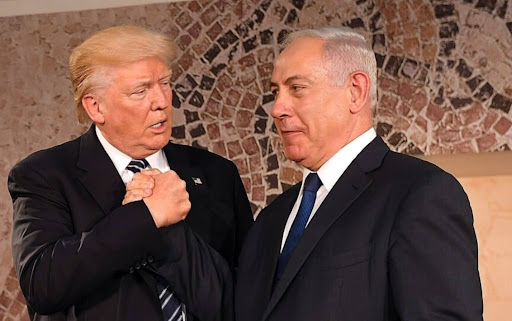
US President Donald Trump’s public statements about Israeli Prime Minister Benjamin Netanyahu have been carefully managed — warm in their affirmation of the relationship, candid in their acknowledgment of specific disagreements, and notably silent on the deeper strategic questions that Director of National Intelligence Tulsi Gabbard addressed directly in congressional testimony. What Trump knows about Netanyahu’s objectives, his assessment of the divergence, and his calculation about how to manage it is visible only partially through the public record — and the gaps are as revealing as the statements.
Trump knows — as his “on occasion he’ll do something” framing made clear — that Netanyahu acts independently on occasion, and that this is a structural feature of the relationship rather than a one-time aberration. That knowledge implies he has processed the South Pars episode not as a surprise but as an instance of an established pattern. The pattern’s existence in Trump’s understanding suggests that prior episodes of Netanyahu acting beyond American preferences have occurred — possibly without the same public visibility that the gas field strike generated.
Trump knows that the objectives are different — Gabbard’s congressional testimony was an official confirmation of what Trump’s own intelligence community has been telling him privately. His public retreat from regime-change rhetoric is itself evidence that he has processed the divergence in strategic terms: if Netanyahu is pursuing transformation and Trump is pursuing containment, then the gap between them requires Trump to define his objectives in ways that don’t commit him to Netanyahu’s broader agenda. The retreat is partly a public articulation of a private assessment.
What Trump has not said publicly is how he actually assesses Netanyahu’s strategy — whether he considers it reckless, visionary, or something in between. His managed public language — “we get along great,” “on occasion he’ll do something” — leaves his personal strategic assessment of Netanyahu’s approach opaque. Whether Trump privately supports Netanyahu’s broader goals while publicly managing their costs, or whether he genuinely believes Netanyahu’s comprehensive approach exceeds what the situation requires, remains unknown. That uncertainty is itself a significant element of how the alliance functions.