
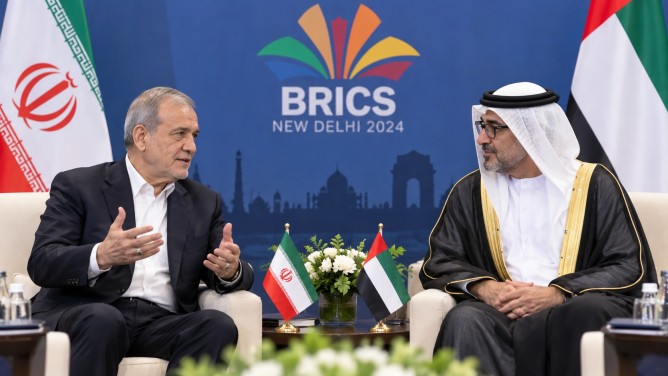
In a recent diplomatic engagement, Iranian President Masoud Pezeshkian and Abu Dhabi Crown Prince Khaled bin Mohamed met on the sidelines of the BRICS Summit in New Delhi, signaling a potential thaw in relations between Iran and the United Arab Emirates. President Pezeshkian described the encounter as constructive, emphasizing a mutual desire to move beyond historical disagreements and focus on future collaboration. This push for rapprochement comes at a time when tensions are still palpable in the region, particularly concerning security and key shipping routes.
Furthering these diplomatic efforts, Iranian representatives are slated to convene with delegates from Gulf countries and Iraq in Oman on September 14. The agenda is expected to center on regional security concerns, with particular attention to the strategic Strait of Hormuz. The aim of these discussions is to foster a greater understanding and enhance collective security measures among the involved nations. Notably, Bahrain has opted not to participate in this upcoming meeting.
In addition to regional diplomacy, President Pezeshkian advocated for strengthened economic ties within the BRICS coalition, proposing an increased reliance on national currencies in trade to reduce vulnerabilities tied to existing global financial systems. He asserted that the current frameworks expose emerging economies to undue political and economic pressures. Highlighting the necessity for BRICS countries to bolster economic resilience and cooperation, Pezeshkian also criticized unilateral sanctions and attacks on civilian infrastructure.
Further emphasizing Iran’s role, Pezeshkian pointed to the nation’s advantageous geographic position, its abundant energy resources, and extensive transit networks as valuable assets that could facilitate the development of trade and energy corridors among BRICS economies. These proposals arrive at a time when the importance of regional dialogue and cooperation is underscored by escalating tensions around the Strait of Hormuz, a critical artery for global energy supplies.